
Ever feel like planning a celebration starts with a whirlwind of “who should we invite?” thoughts? You’re not alone. The guest list is often the very first, and sometimes most daunting, step in bringing any gathering to life. But it doesn’t have to be a source of stress.
Learning how to create a simple guest list for any celebration is about more than just numbers; it’s about intentionally gathering the people who enrich your life and share in your special moments. This guide will walk you through a thoughtful, step-by-step process to build a guest list that feels right for you and your event, ensuring your celebration is filled with warmth and connection.
Table of Contents
- Why Your Guest List is the Foundation of Your Celebration
- Step 1: Brainstorm Your Inner Circles
- Step 2: Define Your Event’s Scope and Boundaries
- Step 3: Prioritize and Categorize Your Guests
- Step 4: Consider Plus-Ones and Children
- Step 5: Leverage Digital Tools for Seamless Guest Management
- Step 6: Handle Special Cases and Cultural Considerations
- Step 7: The Ongoing Evolution of Your Guest List
- Frequently Asked Questions
- Final Thoughts
Why Your Guest List is the Foundation of Your Celebration
Before you pick a theme, choose a menu, or even think about decorations, your guest list sets the stage for everything. It dictates the size of your venue, influences your budget, and most importantly, shapes the atmosphere of your event. A carefully curated guest list ensures that the people you truly want to celebrate with are present, making the occasion more personal and memorable.
Think of it as the heart of your gathering. Whether it’s an intimate dinner party or a grand milestone birthday celebration, the energy of your guests is what makes it special. Getting this right from the start can save you countless headaches down the line, allowing you to focus on creating joy rather than managing logistical chaos. It’s about being intentional with your invitations, fostering deeper connections, and honoring the relationships that matter most.
A well-planned guest list also helps manage expectations. Knowing roughly how many people will attend allows you to choose appropriate invitation templates and plan your space effectively. It helps you visualize the flow of your event, ensuring comfort and enjoyment for everyone. This foundational step is crucial for any host who wants to be truly present and enjoy their own party, rather than scrambling with last-minute details.
Step 1: Brainstorm Your Inner Circles
The first step in how to create a simple guest list is often the most organic: brainstorming. Don’t worry about limits yet. Just grab a notebook, open a spreadsheet, or even use a simple note-taking app, and start listing everyone who comes to mind. Think of this as drawing concentric circles around yourself and the person or event being celebrated.
- Immediate Family: Parents, siblings, children, grandparents. These are often non-negotiable attendees for most significant celebrations.
- Extended Family: Aunts, uncles, cousins, nieces, nephews. Consider how close you are to them and how often you connect.
- Close Friends: Your confidantes, your support system, the people you regularly spend time with.
- Work Colleagues/Neighbors: People you see often in your daily life and have a friendly relationship with.
- Children’s Friends/Parents: If it’s a kids’ birthday party, their friends and their parents are a key group.
- Group Affiliations: Members of your book club, sports team, volunteer group, or faith community.
For a housewarming celebration, for instance, you might focus heavily on neighbors and local friends, alongside immediate family. For an anniversary party, you might lean more towards those who have been part of your journey as a couple. This initial brainstorm is about inclusion, not exclusion. You’ll refine it later, but for now, cast a wide net to ensure no one important is accidentally overlooked.

Step 2: Define Your Event’s Scope and Boundaries
Once you have a broad list, it’s time to introduce some practical considerations. This is where you align your ideal guest list with the realities of your event. Key factors include:
Budget:
This is often the biggest determinant. More guests usually mean higher costs for food, drinks, venue, and favors. Be realistic about what you can comfortably spend without causing financial stress. Remember, a smaller, thoughtfully planned event can be far more enjoyable than an overstretched one.
Venue Capacity:
Whether it’s your backyard or a rented hall, every space has a limit. Overcrowding can make guests uncomfortable and even unsafe. Know your venue’s maximum capacity and use it as a hard cap. For a cozy get-together, you might even prefer a smaller guest count to foster more intimate conversations.
Event Type & Formality:
A casual backyard BBQ will naturally accommodate more people and a wider range of ages than a formal sit-down dinner. A baby shower might be a women-only affair, while a graduation party is often open to extended family and friends. The nature of the celebration helps define who is appropriate to invite.

Desired Vibe:
Do you envision an intimate gathering where everyone knows each other, or a lively party with a mix of different groups? Your guest list is the primary tool for shaping this. If you’re aiming for a relaxed atmosphere, inviting too many acquaintances might dilute the personal connection you’re hoping to achieve.
By considering these boundaries early, you can start to gently trim your brainstormed list, moving from a “wish list” to a “realistic list.” This process isn’t about being exclusionary, but about being responsible and ensuring a positive experience for everyone involved, including yourself.
Step 3: Prioritize and Categorize Your Guests
Now that you have your boundaries, it’s time to refine your guest list. A common and effective strategy for how to create a simple guest list is to categorize your guests into tiers. This helps you make tough decisions and manage potential overflow, especially if you’re working with a strict capacity.
A-List (Must-Haves):
These are the core people you absolutely cannot imagine celebrating without. Immediate family, closest friends, and anyone whose absence would truly diminish the event. For a wedding, this might include your bridal party; for a Sweet Sixteen, it’s likely your teen’s best friends and immediate family.
B-List (Would Love to Have):
This group includes extended family, good friends you don’t see as often, and colleagues or acquaintances with whom you share a significant connection. These are people you genuinely want to share the moment with, but their inclusion might depend on budget and space after the A-list is confirmed.
C-List (Nice to Have):
This tier consists of more casual acquaintances, distant relatives, or people you feel obliged to invite but aren’t central to the celebration. You might only invite this group if you have ample budget and space, or if many A- and B-listers decline. This list can also serve as a “backup” if you have unexpected declines from higher tiers.
Here’s a simple table to help you prioritize your guest list:
| Category | Description | Considerations | Example |
|---|---|---|---|
| A-List | Essential guests; event feels incomplete without them. | Invite first; prioritize budget/space for this group. | Immediate family, best friends, key celebrants. |
| B-List | Highly desired guests; important to share the joy. | Invite after A-List RSVPs are in; depends on capacity. | Extended family, close friends, significant colleagues. |
| C-List | Optional guests; would be nice if space/budget allows. | Invite only if significant declines from A/B lists. | Distant relatives, casual acquaintances, old friends. |
This tiered approach provides flexibility. Send out your A-list invitations first. Once you receive their RSVPs, you’ll have a clearer picture of available spots and can then extend invitations to your B-list, and potentially C-list, if appropriate. This methodical approach helps in creating a simple guest list without feeling overwhelmed by the sheer number of people.

Step 4: Consider Plus-Ones and Children
Deciding on plus-ones and whether children are invited can significantly impact your guest count and the overall vibe of your celebration. These are often sensitive topics, so it’s best to have a clear policy from the outset.
Plus-Ones:
A common etiquette rule is that if a guest is in a serious, long-term relationship (married, engaged, or living together), their partner should be invited by name. For single guests, the “plus-one” dilemma is trickier. Offering a blanket plus-one to everyone can quickly inflate your guest count. Consider these options:
- Invite only named partners: Clearly address invitations to “Mr. John Smith and Ms. Jane Doe” or “John Smith and Guest.”
- Offer plus-ones only to those who won’t know many people: If a friend is traveling far or won’t have other familiar faces, a plus-one can make them feel more comfortable.
- Limit plus-ones for certain event types: For very intimate gatherings, you might decide against general plus-ones.
Be consistent with your policy to avoid misunderstandings. If you’re sending digital invitations, you can often specify the number of guests allowed per invite, which helps manage expectations.
Children:
The decision to include children depends heavily on the type of event and your preferences. A cultural celebration like a Griha Pravesh might traditionally include children, whereas a formal anniversary dinner might be adults-only. Clearly state your preference on the invitation:
- “Adults-only reception”
- “Children welcome”
- Specific names of invited children
If you opt for an adults-only event, be prepared for some guests to decline or inquire about childcare. Handle these conversations kindly and understand that not everyone will be able to attend without their children. The goal is to create a simple guest list that reflects your vision for the event, not to cause friction.
Step 5: Leverage Digital Tools for Seamless Guest Management
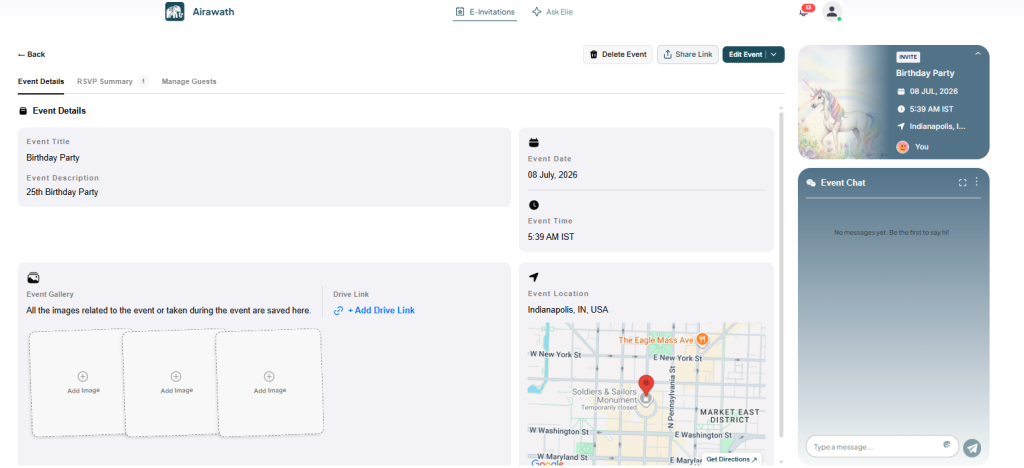
Once you’ve finalized your guest list, the next step is to invite them and manage RSVPs. This is where modern digital platforms shine, making the process incredibly easy and stress-free. Airawath, for instance, is a relationship-focused celebration platform that helps people create, share, and manage memorable events through beautiful free digital invitations.
Here’s how platforms like Airawath simplify guest list management:
- Choose a Template: Browse hundreds of invitation designs for every occasion, from a vibrant Half Saree ceremony to a fun kids birthday invitation. You can even generate a custom background with AI or upload your own design.
- Enter Event Details & Guest List: Input your event name, date, time, location, and easily upload or type in your guest list. You can send invitations via email, WhatsApp, or SMS, reaching everyone efficiently.
- Send & Track RSVPs Live: With Airawath, you send out your invitations and then watch as RSVPs come in live. This instant feedback allows you to track who’s coming, who’s declined, and who you still need to hear from. No more chasing down replies or manually updating spreadsheets.
Using a digital platform not only streamlines the invitation process but also provides real-time insights into your guest count, helping you finalize catering numbers, seating arrangements, and other logistical details. It’s an efficient way to manage your guest list, ensuring you’re always up-to-date and ready to celebrate for the people who matter most.
Step 6: Handle Special Cases and Cultural Considerations
When creating a guest list, especially for significant life events, you might encounter unique situations or cultural expectations that require thoughtful consideration. The key is always to approach these with respect and a clear understanding of your own boundaries.
Cultural & Religious Ceremonies:
For events like a Griha Pravesh (Indian housewarming) or a Dhoti ceremony, guest list customs might differ from mainstream American celebrations. Often, these events involve inviting a broader circle of family and community members, sometimes including distant relatives or elders out of respect. It’s important to research and understand these traditions or consult with family members who are familiar with the customs to ensure you honor cultural nuances appropriately.
For example, in some Indian traditions, it’s customary to invite all members of certain family branches, even if you don’t interact with them regularly. This isn’t just about attendance; it’s about acknowledging relationships and community ties. Airawath provides specific Indian celebration invitations that can help you set the right tone for such events.
Navigating Uninvited Guests:
Sometimes, despite your best efforts to create a simple guest list, someone might assume they’re invited or ask if they can bring an additional person you hadn’t planned for. Handle these situations gently but firmly. You might say, “We’re keeping the celebration quite intimate due to space, but I’d love to catch up another time!” or “Unfortunately, we’re at capacity, but thank you for understanding.” Your peace of mind as a host is important.
The “Obligation” Invite:
Feeling obligated to invite someone you don’t genuinely want at your event can detract from your enjoyment. While some obligations are unavoidable (e.g., certain family members), try to minimize these where possible. Remember, this is *your* celebration, and you have the right to curate the guest list to create the atmosphere you desire. It’s about strengthening relationships with those who bring you joy, not fulfilling social debts that drain your energy.
Thoughtful consideration of these special cases ensures your guest list is not only practical but also respectful and aligned with your personal and cultural values.
Step 7: The Ongoing Evolution of Your Guest List
Even after sending out invitations, your guest list isn’t static. It’s an evolving document that requires a little ongoing attention. This final stage is about managing the responses and making adjustments as needed.
RSVP Management:
As RSVPs roll in, keep your list updated. Digital platforms like Airawath automatically track responses, but if you’re using a manual system, be diligent. Note who has accepted, who has declined, and who you still need to follow up with. Set a clear RSVP deadline and don’t hesitate to gently remind guests who haven’t responded a few days before the deadline. A simple text or email can often prompt a reply.
Last-Minute Changes:
Life happens! Guests might need to cancel last minute, or you might find you have extra space due to declines. If you have a B-list, this is when you might reach out to those individuals. Be mindful of timing – inviting someone a day or two before an event can feel like an afterthought, so try to give them adequate notice if possible.
Post-Event Follow-Up:
After the celebration, your guest list can still be useful. It’s a fantastic record for sending thank-you notes or even just remembering who was there to share your special day. It also serves as a great starting point for future events, helping you recall who you’ve celebrated with and who you might want to include again.
Maintaining an accurate and up-to-date guest list throughout the entire process is a mark of a thoughtful host. It reduces stress and allows you to be the person who always remembers, focusing on the joy of the occasion rather than logistical headaches. With tools like Airawath, this entire journey, from sending invitations to managing guest experiences, becomes much smoother.
Frequently Asked Questions
How far in advance should I finalize my guest list?
Ideally, aim to finalize your core guest list (A-list) at least 2-3 months before a major event, and 4-6 weeks for smaller gatherings. This gives you time to send invitations, receive RSVPs, and make necessary adjustments before your final headcount is due to vendors.
What’s the best way to keep track of RSVPs?
Digital invitation platforms like Airawath offer live RSVP tracking, which is the easiest method. They update automatically as guests respond. If using paper invitations, a simple spreadsheet with columns for name, invited, RSVP status, and notes works well.
Is it rude to uninvite someone from my guest list?
Generally, yes, uninviting someone is considered impolite and should be avoided unless absolutely necessary due to extreme circumstances. It’s better to be thoughtful during the initial guest list creation to prevent this awkward situation. If you must, a sincere, private apology is essential.
How do I handle guests who don’t RSVP by the deadline?
A few days after the deadline, send a polite, personal follow-up message. A simple text or email like, “Hi [Name], just checking in about [Event Name] – we’d love to know if you can make it by [new soft deadline] so we can finalize numbers!” usually works.
Can I invite different groups of people to different parts of the celebration?
Yes, this is common for events like weddings (e.g., a smaller ceremony, larger reception). For other events, you might invite close friends to an intimate dinner and a wider circle to a casual after-party. Ensure your invitations clearly specify which part of the event each guest is invited to.
How can I make sure my guest list feels inclusive?
Review your list to ensure it reflects the diversity of your relationships. Think about different life stages, cultural backgrounds, and social circles. A balanced guest list often leads to more interesting conversations and a richer experience for everyone, making the celebration truly special.
Are digital invitations and guest list management free?
Yes, Airawath offers free digital invitations and RSVP tracking. Our platform is designed to simplify your celebration journey at no cost to you, with personalized gift recommendations available through Talk To Elie, our AI gift assistant, funded through affiliate commissions.
Final Thoughts
Creating a simple guest list for any celebration doesn’t have to be a stressful chore. By approaching it with thoughtfulness, intention, and a clear understanding of your event’s scope, you can build a list that brings together the people who truly matter. Remember, the goal is to create an atmosphere of connection and joy, where every guest feels valued and every moment feels authentic.
From brainstorming your inner circles to leveraging digital tools for seamless management, each step helps you move closer to a memorable event. And should you need a little help finding thoughtful gifts for your attendees or the host, remember Talk To Elie is always there to offer personalized recommendations. Ready to be the person who always remembers? Start creating your beautiful, free digital invitations today and let Airawath be your relationship wingman for your next celebration.