The Day She Became a Woman — A Mother’s Tearful Story of Her Daughter’s Half Saree Ceremony
Introduction
There are moments in a mother’s life that no photograph can fully capture. The trembling hands as she drapes the silk. The quiet prayer whispered under breath. The moment her little girl — her baby who once refused to eat without cartoon songs playing in the background — stands tall in a pattu pavadai and half saree, looking like the young woman she was always meant to become.
This is their story. And it might just feel a little like yours too.
What Is a Half Saree Ceremony?
The Half Saree ceremony, known as Langa Voni in Telugu or Pavadai Sattai in Tamil, is one of South India’s most significant coming-of-age rituals. It marks the transition of a young girl into womanhood, typically celebrated when she reaches puberty. The ceremony involves the girl wearing a half saree — a three-piece outfit consisting of a skirt (pavadai or langa), a blouse (choli), and a dupatta draped in the style of a saree.
Far more than a fashion milestone, this event is a public declaration: our daughter is growing up, and we celebrate her with flowers, gold, sweets, and family. It is a day of blessings, rituals, and — inevitably — tears.
The Morning That Changed Everything
Meenakshi remembers waking up at four in the morning on the day of Kavya’s half saree ceremony. She had been planning this for eight months — the silk pattu pavadai in deep red with golden zari borders, the temple jewellery set they had custom-ordered, the marigold and banana leaf decoration for the hall, and the menu that included Kavya’s absolute favourites: pal payasam and murukku.
‘I kept checking if I had forgotten something,’ Meenakshi recalls, laughing softly. ‘The gold, the silk, the guests list, the invitation — everything. But when I saw Kavya sit down at the ritual space, surrounded by turmeric and kumkum and banana leaves, I forgot all of it. I just cried.’
Kavya, now 17 and studying in her first year of college, laughs when she hears this. ‘Amma cried three times before noon,’ she says. ‘Once when I wore the saree. Once when Paati tied the thali. And once when I received blessings from Periamma.’
Three times — and each one meant something different.
The Ritual That Binds Generations
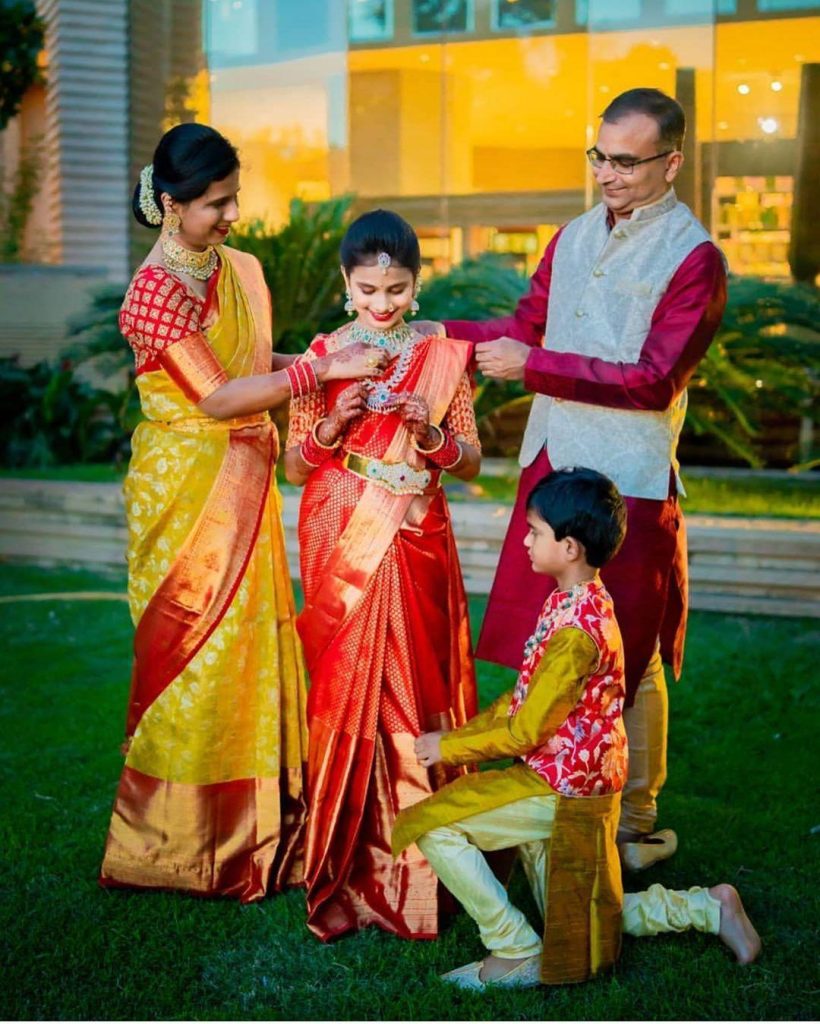
What makes the half saree ceremony so powerful is how it threads past and present together. Kavya’s grandmother — her paati — had worn a half saree at her own coming-of-age ceremony in a small village in Tirunelveli, over sixty years ago. The ritual was simpler then: a banana leaf, a small prayer, the women of the household gathered around. But the emotion was identical.
‘When I placed the silk over Kavya’s shoulder, I remembered my own mother doing the same for me,’ Paati said, her voice barely above a whisper. ‘It is not just a saree. It is everything we want for our daughters — beauty, strength, grace, and protection.’
The sacred thread of tradition runs through three generations in that single gesture.
The Guests, the Gifts, and the Gratitude
More than 200 guests had been invited — relatives from Chennai, Madurai, and even from abroad. Uncles and aunties arrived with sarees, sweets, and jewellery. Cousins filled the hall with laughter. The air smelled of jasmine, camphor, and freshly cooked rice.
Gift-giving is an essential part of the half saree ceremony. Traditionally, close family members present the young girl with gold ornaments, silk sarees, and sweets. Today, modern families also include personalised gifts — custom jewellery boxes, memory albums, or even meaningful keepsakes that the girl can carry into adulthood.
If you are planning your daughter’s half saree ceremony and wondering how to send invitations or manage your guest list, airawath.com offers beautifully designed E-Invitations with traditional South Indian motifs, a seamless RSVP system so you know exactly who is attending, and curated gift suggestions that your guests can browse and choose from — making gifting thoughtful and personal.
The Moment That Mothers Remember Forever
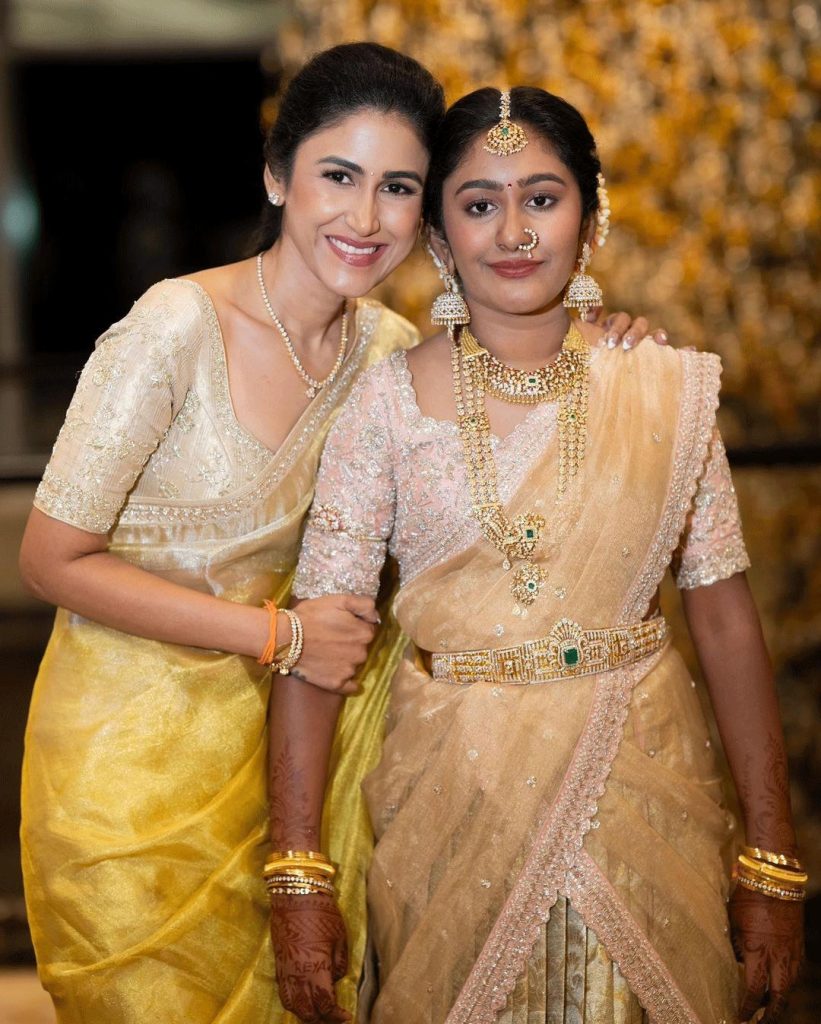
When the main ritual was complete and Kavya stood up — draped perfectly in her half saree, hair adorned with jasmine, eyes lined with kajal — the room fell quiet for a moment.
Then someone whispered: ‘She looks just like you did, Meenakshi.’
And that was the third time Meenakshi cried.
‘I looked at her and saw myself at her age,’ Meenakshi says. ‘And I thought, I hope she knows how much she is loved. Not just today, but every single day.’
Kavya, standing next to her mother, gently squeezes her hand. ‘I know, Amma. I know.’
Why This Ceremony Still Matters
In an age where many traditions are quietly fading, the half saree ceremony remains deeply cherished — not because it is obligatory, but because it is deeply human. It says: we see you. We celebrate you. You are no longer a child, but you will always be our child.
For mothers like Meenakshi, no amount of planning or preparation fully prepares them for the flood of emotion on that day. And perhaps that is the point. Perhaps the tears are the ceremony’s most honest moment — the part where love becomes too big to hold inside.
Celebrate with Heart and with AIRAWATH.COM
✨ Plan Your Half Saree Ceremony with AIRAWATH.COM
Make every moment unforgettable. Head to airawath.com to create stunning digital E-Invitations, explore curated gift suggestions for your loved ones, and manage your RSVP list effortlessly — all in one place.
Related Blog
You might also like

Supporting Non-Profits: How Thoughtful Communication Builds Lasting Impact