The Modern RSVP: Why Digital Is the New Standard for 2026
Event planning in 2026 comes with more tools than ever before, yet it has never felt more fragile. Guest behavior is unpredictable. Plans change last minute. Headcounts shift hours before doors open. At the center of this complexity sits one deceptively simple question: Who is actually coming?
For decades, RSVPs were treated as a formality, a card returned, a spreadsheet updated, a box ticked. Today, that approach no longer holds. The modern RSVP has evolved into a real-time system, a behavioral signal, and increasingly, a planning intelligence layer. Digital isn’t just more convenient. It’s the only format capable of keeping up with how people live, respond, and decide in 2026.
This shift isn’t cosmetic. It’s structural.
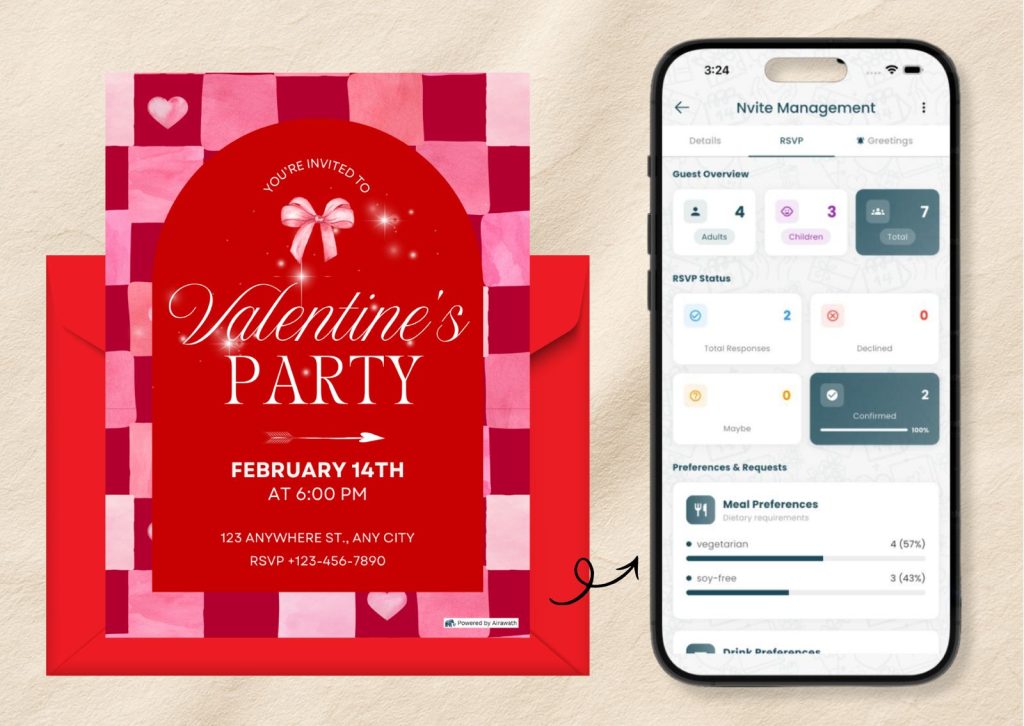
The quiet death of the traditional RSVP
Paper RSVP cards, static Google Forms, and manual spreadsheets were designed for a slower world, one where guests responded once and stuck to their decision. That world is gone.
Today’s hosts face familiar frustrations:
- Guests who say yes… then disappear
- Guests who don’t respond but still show up
- Plus-ones added informally through messages
- Dietary changes shared days before the event
- Entire guest segments responding only after reminders
These aren’t edge cases. They are the norm, repeatedly echoed across wedding forums, private event groups, and corporate planning threads. Traditional RSVP methods offer no foresight, no adaptability, and no way to interpret intent. They tell you what someone clicked — not how likely they are to follow through.
As event complexity rises, static RSVPs collapse under pressure.
What “digital RSVP” really means in 2026
To call modern RSVPs “digital” is almost misleading. This isn’t about replacing paper with a screen. It’s about how responses move, update, and inform decisions in real time.
In 2026, guests expect:
- One-tap access via WhatsApp links, QR codes, or link-in-bio invites
- Mobile-first flows that take seconds, not minutes
- Automatic reminders without awkward follow-ups
- The ability to update responses as plans change
Behind the scenes, hosts expect something else entirely:
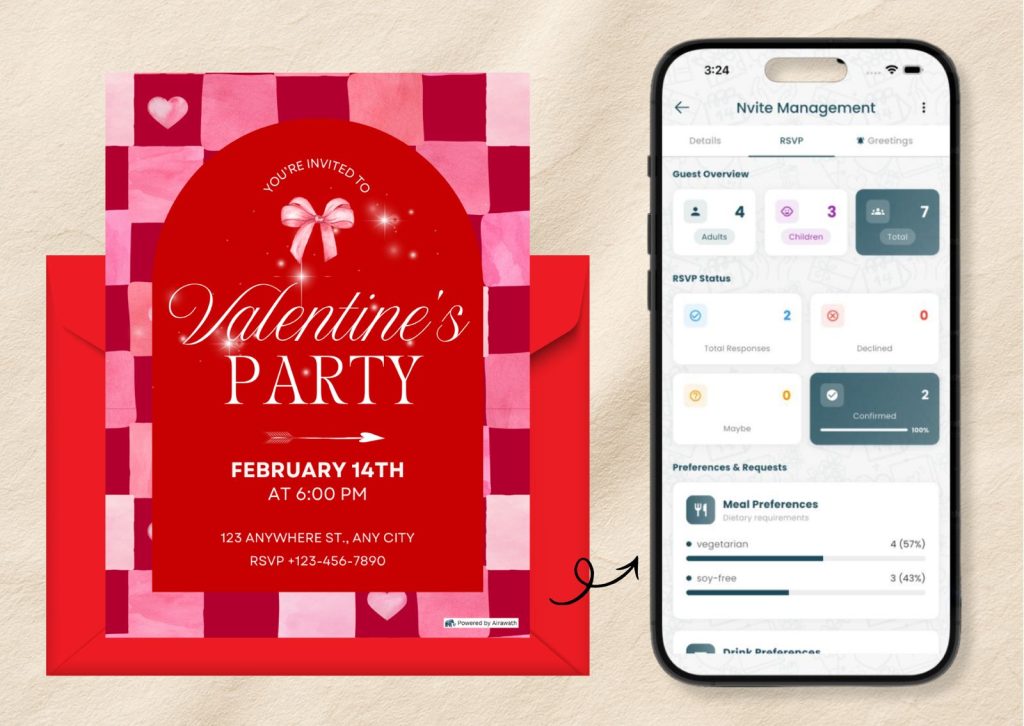
- Live headcounts that update instantly
- Visibility into who hasn’t responded and why
- Structured data for meals, seating, gifting, and staffing
- Fewer surprises as the event approaches
A digital RSVP is no longer a form. It’s a living system, one that evolves as guest behavior evolves.
From responses to signals: the intelligence layer
Here’s where the real shift happens.
Modern RSVP systems don’t just collect answers. They capture signals:
- How quickly someone responds
- Whether they revise their RSVP multiple times
- If reminders are ignored or not acted upon
- Patterns across guest groups and timelines
When analyzed correctly, these signals reveal intent. And intent is far more valuable than a yes/no checkbox.
This is where platforms like Airawath fundamentally change the role of RSVPs.
Instead of treating responses as static inputs, Airawath applies an AI layer that:
- Reads patterns across guest behavior
- Forecasts likely attendance fluctuations
- Identifies high risk no show segments
- Suggests smarter reminder timing and messaging
- Helps planners prepare for realistic turnout, not hopeful numbers
The result? RSVPs become predictive, not reactive.
What social behavior is telling us
Social platforms have quietly confirmed this shift.
Across TikTok, Instagram, and Reddit, one theme repeats:
Guests want frictionless experiences. Hosts want certainty. Digital RSVPs sit at the intersection of both.
QR-based invites, WhatsApp confirmations, and link-based event hubs are no longer seen as informal, they’re seen as efficient. In fact, anything that requires printing, mailing, or manual follow-ups increasingly feels outdated.
Digital RSVPs don’t just align with technology trends. They align with how people actually behave.
When paper still has a place
This doesn’t mean paper invitations are obsolete.
High-touch moments like heirloom weddings, milestone anniversaries, and ceremonial events still benefit from physical keepsakes. But even here, the smartest hosts separate symbolism from logistics.
Paper invites set the tone.
Digital RSVPs run the operation.
Hybrid models allow hosts to preserve emotion while gaining intelligence, a balance that defines modern etiquette rather than breaks it.
The future of RSVPs: from confirmation to orchestration
Looking ahead to 2028, RSVPs won’t be standalone systems at all.
They will:
- Integrate with full event intelligence platforms
- Personalize guest journeys automatically
- Trigger workflows for staffing, gifting, and follow-ups
- Learn from past events to improve future ones
RSVPs will become the starting point of orchestration, not the end of a task.
Airawath is built for this future, one where planning decisions are informed continuously, not patched together at the last moment.
The modern standard
Digital RSVPs are no longer a trend. They are infrastructure.
In 2026, the question isn’t whether you should go digital?
It’s how much intelligence do you want behind your decisions?
Because planning shouldn’t rely on hope.
And hosting shouldn’t rely on guesswork.
Ask AIRA how Airawath turns RSVPs into clarity, before your next event.
Related Blog
You might also like

Eco-Friendly Gifting: 6 Sustainable Picks for the Conscious Giver