What to Gift a Host When You Have Dietary Restrictions?

You’re standing in the kitchen, invitation open on your phone, thinking through logistics.
You’ve already checked the menu. You’ve already figured out what you can eat or what you can quietly skip, and now comes the other question, the one that feels surprisingly awkward:
What do I bring?
When you have dietary restrictions, whether they’re medical, religious, ethical, or personal, gifting a host can feel oddly complicated. Food is the default thank-you gift, yet it’s the very thing you navigate most carefully. Bringing something you can’t eat yourself can feel strange. Bringing something you can eat can feel risky, and not bringing anything at all can feel… wrong.
If you’ve ever overthought this, you’re not alone.
The good news is this: gifting is not about consumption. It’s about appreciation. Once you anchor yourself there, the pressure lifts and thoughtful options open up.
- First, Let’s Reframe the Moment
- When Food Feels Complicated, Think Beyond Food
- If You Do Bring Food, Choose Universally Comfortable Options
- Experience-Based Gifts Are Underrated
- What About Bringing Something You Can Eat?
- A Few Things Best Left at Home
- Do You Need to Explain Your Dietary Restrictions?
- The True Hosts Rarely Say Out Loud
- A Final Thought
First, Let’s Reframe the Moment
When you bring a gift to a host, you’re not saying, “This is what I like.”
You’re saying, “Thank you for opening your home and your time.”
That distinction matters, especially if you have dietary restrictions. Your gift doesn’t need to mirror your needs, justify them, or explain them. It doesn’t even need to be something you’ll personally enjoy.
It just needs to feel considered.
Hosts don’t remember whether you ate the chocolates. They remember that you showed up with care.
When Food Feels Complicated, Think Beyond Food
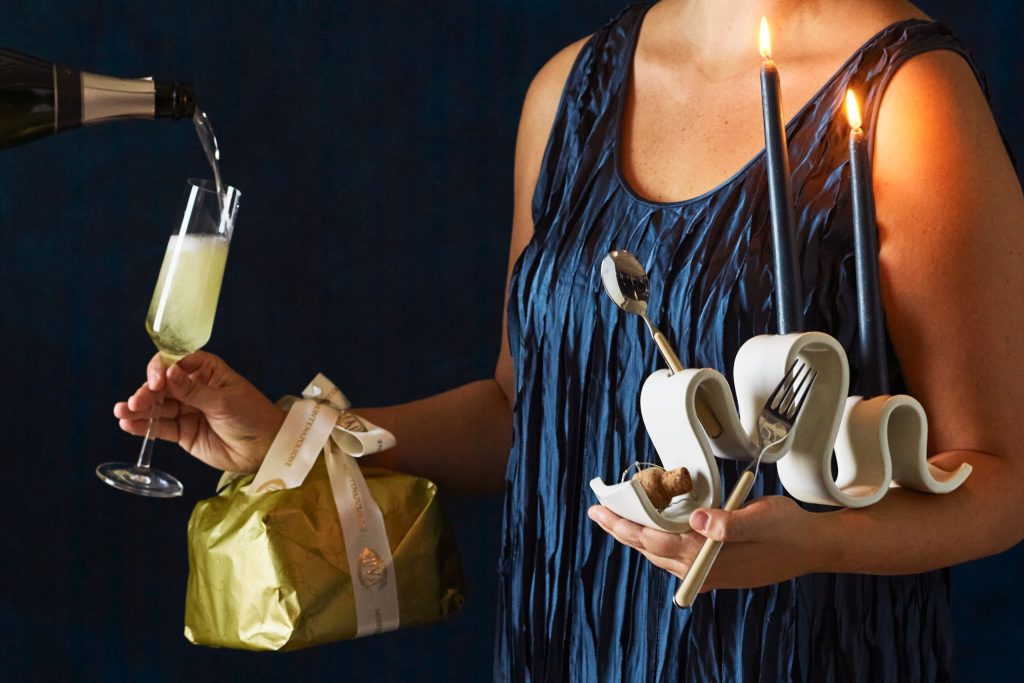
Food gifts are traditional, but they’re not mandatory. If your relationship with food is cautious by necessity, it’s completely okay to step outside that category.
Some of the most appreciated host gifts have nothing to do with eating at all.
A simple bouquet of flowers (nothing too fragrant if you’re unsure), a candle, a small plant, or even a thoughtfully chosen tea towel or serving spoon can feel more personal than a generic bottle of wine.
These gifts say, I noticed you, rather than I defaulted to convention.
If your host enjoys entertaining, items they can reuse coasters, linen napkins, a small tray feel both practical and intimate. They don’t expire, they don’t trigger anxiety, and they don’t require explanation.
If You Do Bring Food, Choose Universally Comfortable Options
Sometimes, you want to bring something edible. That’s okay even if you can’t partake yourself.
The key is choosing items that are easy to share, easy to regift, or easy to enjoy later without pressure.
Think sealed, shelf-stable, and flexible.
A beautifully packaged box of chocolates, artisanal cookies, high-quality olive oil, specialty honey, or a thoughtfully chosen non-alcoholic beverage all work well. These gifts don’t demand to be opened immediately, don’t center the table, and don’t create awkward moments if the host is juggling timing.
If you’re worried about allergens or preferences, lean toward items that are clearly labeled or intentionally neutral. The goal isn’t perfection, it’s ease.
And no, it’s not strange if you don’t eat what you bring. That’s not hypocrisy. That’s generosity.
Experience-Based Gifts Are Underrated

One of the quietest, kindest ways to sidestep food entirely is to gift an experience, especially for hosts you know well.
A small note with a promise (“Coffee on me next week,” “Dinner at our place soon,” “A movie night invite”) can feel deeply personal. It shifts the focus from the object to the relationship.
For hosts who love rituals, even a handwritten card acknowledging the effort they put into gathering people can mean more than anything store bought.
Hosting takes emotional labor. Being seen for that matters.
What About Bringing Something You Can Eat?
This is where things often feel trickiest.
If you have dietary restrictions, you might be tempted to bring a dish that suits your needs, gluten-free, vegan, allergy-safe, so you know there’s at least one thing you can enjoy.
This is perfectly fine when communicated gently.
If the gathering is casual, a simple line like, “I brought something I know I can eat, please feel free to share or not,” sets the tone without making it about you.
What tends to feel uncomfortable isn’t the accommodation, it’s the surprise. Transparency, offered lightly, avoids that.
That said, if you sense the host is already managing a lot, it’s also okay to eat beforehand and bring a non-food gift instead. Self-sufficiency is not impolite; it’s considerate.
A Few Things Best Left at Home
While there’s no single “wrong” gift, there are a few situations that can unintentionally add stress.
Highly perishable items that need immediate refrigeration.
Strongly scented candles or flowers if you’re unsure of sensitivities.
Homemade food when you know your host is anxious about allergies or cross-contamination.
These aren’t bad ideas, they’re just context-dependent. When in doubt, simplicity usually wins.
Do You Need to Explain Your Dietary Restrictions?
Short answer: no.
Longer answer: only if you want to.
You don’t owe a backstory to justify a gift choice. You don’t need to explain why you can’t eat what you brought, or why you didn’t bring food at all.
If it comes up naturally, a brief explanation is enough. If it doesn’t, that’s okay too.
The more relaxed you are, the more relaxed everyone else will be.
The True Hosts Rarely Say Out Loud
Most hosts aren’t evaluating your gift. They’re relieved you came.
They’re hoping people feel comfortable. They’re wondering if everyone’s having a good time. They’re thinking about timing, dishes, conversations, and whether anyone needs another drink.
Your gift is not a test. It’s a gesture.
When that gesture feels thoughtful even simple, it lands.
A Final Thought
If you have dietary restrictions, you already spend a lot of mental energy navigating social spaces. Gifting doesn’t need to add to that load.
Choose something that feels easy to give. Choose something that reflects gratitude, not obligation. And trust that your presence, more than anything you carry through the door, is what matters most.
Thoughtfulness is not measured by how perfectly you fit tradition; it’s measured by how human your choices feel.
And that, you’re already doing well.
Related Blog
You might also like

CSR in Action: Bridging the Gap Between Business and Community